Knowing When To Let Go | Healthy Aging Series: S12 E29
Sometimes your real superpower is realizing that you’re no longer a young man or young woman and then realizing that there are things that are better left for younger people to do.
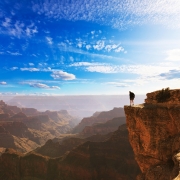
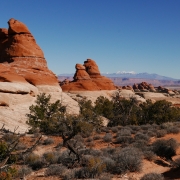
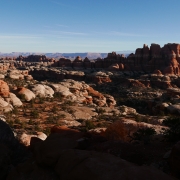
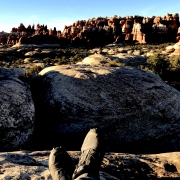
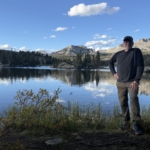
I’m sitting on the backside of the Cirque of the Towers in the Wind River Range, Wyoming. Quite a view.
I woke up early to catch the sun transform Shadow Lake into a Bierstadt painting. This place had been on my wish list, and when my hiking buddy, “TP,” invited me to join him on a five-day, four-night backpacking trip to do the 25-mile loop, I started preparations the next day.
I was going to spend the next four months trying out new gear and improving my filmmaking skills, continuing my fitness training to include lots of steps, rucking with 40 lbs., and weight training.
In May, my son and I backpacked up to Stewart Lake in northern New Mexico. It was a great planning trip. What I didn’t expect was receiving the gift, a month later, of a stent in my Right Coronary Artery, which was blocked 95%.
Luckily, there was no damage to my heart.
I continued my training, my filming, and my gear prep.
I can honestly say I was ready.
BTW, I turned 70 during all the training.
A caveat to all this prep was my decision to put together a quality film to post on my YouTube channel: @truenorthwaypoints. I wrestled with what photography gear to take. I have used a GoPro for most of my video, but I also have a Sony Alpha 7c with a 20-millimeter lens and a 28-to-200mm zoom lens. Plus, all the batteries, two power banks, and two lightweight tripods—one for the Sony and one for the GoPro. I decided to take it all.
All told, my camera gear added 10 lbs. to my pack.
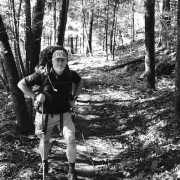
I’ve packed that kind of weight before, when I was in my 50s and early 60s, but I’m not a young man anymore.
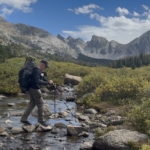
On our first day, we started at the Big Sandy Trailhead. It was hailing on us as we drove to the field that had been turned into a parking lot. We backpacked six miles to Dad’s Lake, starting from 9,100 feet of elevation and going up to about 9,800 feet.
Pretty high up for a flatlander.
It took us 4 hours and 45 minutes, and my average heart rate was 123 BPM. We stopped a lot. Rested. Hydrated.
TP was my guide and coach and did a great job at both. He is 63 and had spent the previous three weeks hiking in the Wind River Range, two weeks with his son, and the previous week doing 50-plus miles on a solo trip.
The elevation got to me.
I had done a rehearsal backpack a few weeks earlier. Same pack weight and same distance. Backpacking at 10,000 feet is no joke.
Yesterday, our second day, was a little longer: 6.73 miles in 5 hours and 45 minutes, with an average heart rate of 116 BPM.
Overall, we didn’t gain a lot of elevation but climbed 1,148 feet, ending at 10,332 feet. We found a campsite at Shadow Lake.
I was exhausted.
My shoulders hurt. My feet hurt. I developed a pain in my left big toe, which I thought was another episode of gout. Those of you who’ve had gout know how painful that can be.
But yesterday, as we approached the backside of the Cirque of the Towers and got our first glance at Texas Pass, we both looked at each other. I know I was asking myself, and I think TP was asking himself: Do we want to do this?
FYI: It’s not an official trail. If you want to complete the loop, you have to summit Texas Pass, which tops out at 11,400 feet. So, it would be approximately an additional 1,200-foot climb in maybe a mile and a half. You climb 700 feet in the last .7 miles.
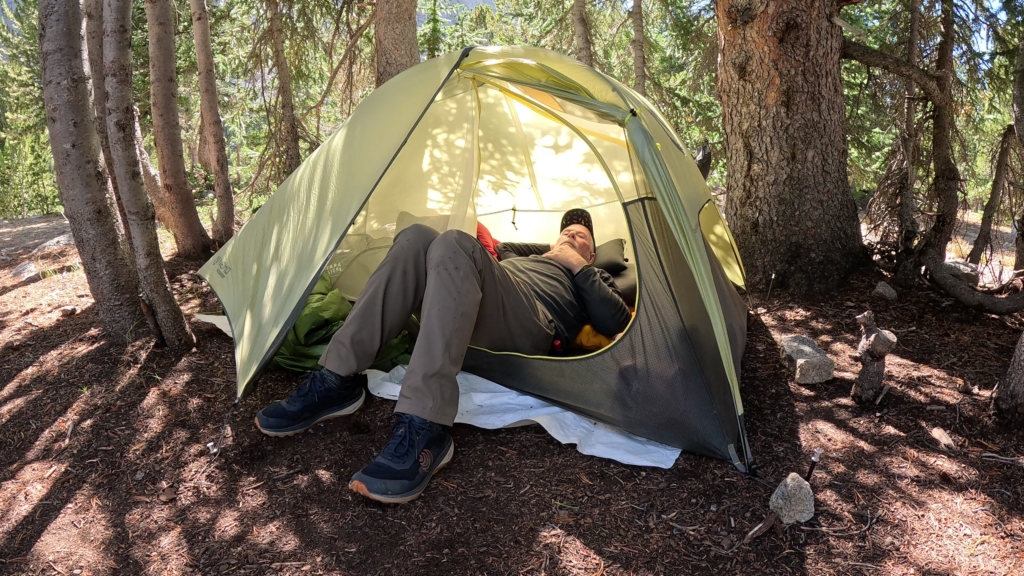
As we settled in and assessed our status, we wisely decided to spend the next day as a zero day and stay one more night at Shadow Lake, then go back to Dad’s Lake and then back to the trailhead.
It would still be five days, four nights, and 25 miles—minus Texas Pass, minus Jackass Pass.
I can’t say that we were the oldest two backpackers on the trail, but I’m pretty sure that I was the oldest backpacker I passed, and TP was probably in the top 10%.
I’ve totally recovered this morning. No big toe pain. My shoulders were fine. I slept as well as any person could sleep at 10,000 feet.
And now the third day, I’m enjoying a day of rest, and I’m looking forward to retracing our steps back to Dad’s Lake. Sometimes it’s okay to turn back, and although Texas Pass was something we could have done, clearly it was something we shouldn’t have done.
Sometimes you have to let go of the younger images that you have of yourself.
I am strong.
I packed in 40 lbs. for twelve miles at 10,000 feet elevation with a stent. I am a force at 70, but I’m not a young man anymore, and there is a smidgen of me that grieves for that younger man.
If you’ve read much on aging, you hear a lot about those latter stages of generativity and integrity. These are the two later stages, and in simple terms, they are giving back and letting go.
If you’re aging well, it’s because you are giving back and transferring your wisdom to younger generations, and you are letting go—coming to terms with the fact that you are not that young man or young woman anymore, and you are at peace with that.
But in the process of letting go, you embrace who you are right now.
You embrace your ability to find joy and happiness in the simple things—in the cool breeze and the sun shining in your face.
I got to spend five days and four nights in the Wind River Range.
Texas Pass is for the young and fearless.
For me, I will enjoy the adventures that most 70-year-old men only dream about.
And return home to a sweet wife who encourages him to follow his adventurous blisses, but is secretly thankful that he has discovered his true superpower:
Knowing when to let go.