There Is Nothing Wrong With Your Mirror | Healthy Aging Series: Season 13, Chapter 3
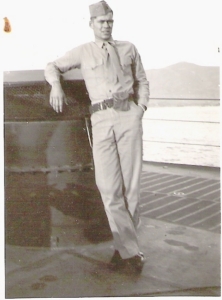
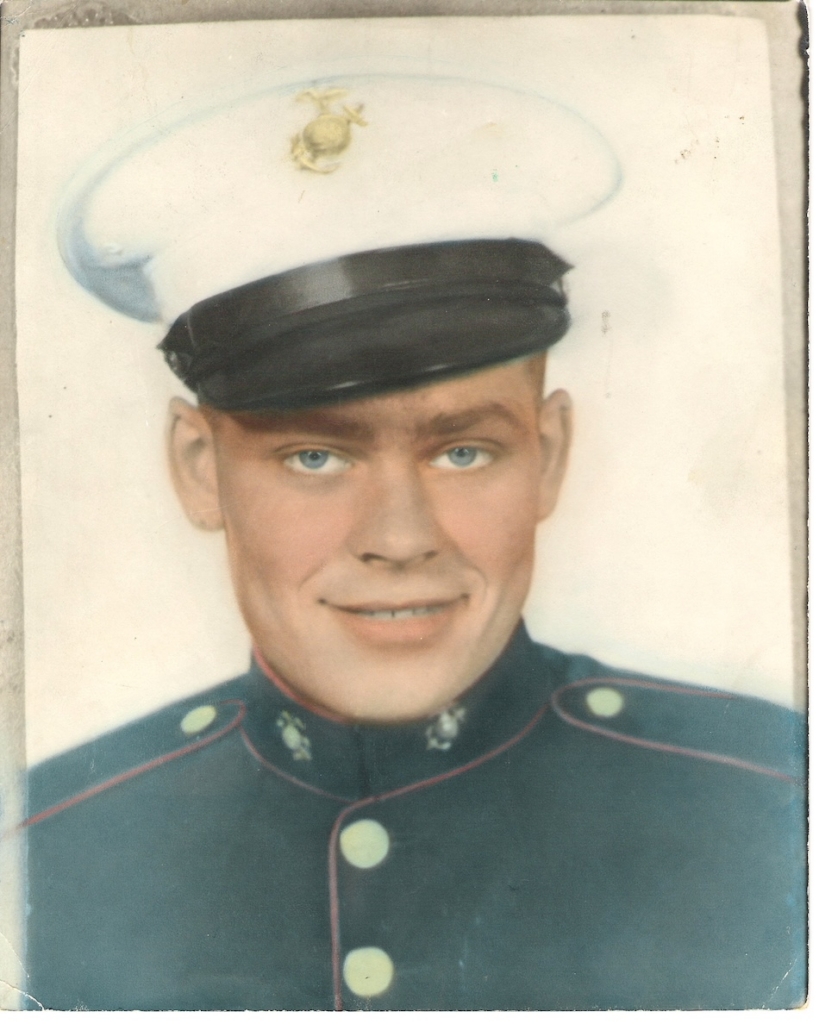
In January of 1944, my dad was headed to the bus station to enlist in the Marine Corps. His father was taking him. He wanted to see the world. He spent most of his time on the USS Atlanta in the South Pacific.
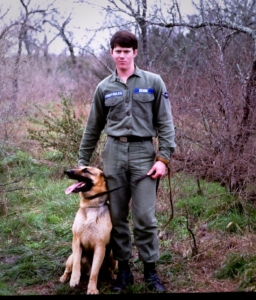
Thirty years later, he would be taking me to the bus station on my way to enlist in the United States Air Force. I, too, wanted to see the world, and I spent much of my time in Asia.
On the surface, the two stories look like similar adventure narratives: boy coming of age, boy leaving home, boy becoming a man.
But there is a deeper narrative to these stories. Two fathers. Two sons.
My grandfather was a farmer, and my father grew up working on Grandpa’s farm. He hated it. In Dad’s memoir, he writes, “He was a slave driver. He expected us to work from daylight to dark.”
“Working on the farm for Pat Neese,” he writes, “was no way to go through life if you want to enjoy life. I would rather pick shit with the chickens before I would stay home and work for him.”
Grandpa was a very harsh disciplinarian, and he attempted to break my father’s will, which caused my father to carry around a lot of anger toward my grandpa. “This is one soul he could not conquer.”
Grandpa had his strong points. Despite having only an elementary education, he wanted his children to graduate from high school. He was hardworking. A very good farmer. And a good provider.
When my father received his military deferment because he was a farmer’s son, he tore it up and “filed it in the trash can.” Grandpa, as Dad describes later, “had a shit fit.” “I was not about to stay home and work on a farm,” he explains, “when I could go and see the world.”
On that cold January morning, standing in the bus station parking lot, Grandpa handed my father a $20 bill, shook his hand, and wished him luck.
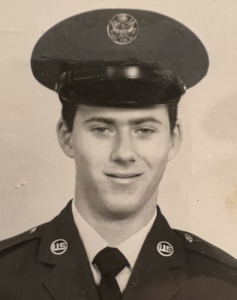
Thirty years later, Dad was driving me to a similar Greyhound bus station. After graduating from high school, Dad had invited me to work with him. I loved those drives with my father. He was so handsome. And so gentle. I grew up watching him kiss my mom before going out the door in his business suits.
I don’t remember much of the conversation on that drive to the depot, but I have remembered three words these fifty-two years later:
“Kimberly, I envy you,” he said.
We might not have hugged. We might not have said, “I love you.” We didn’t grow up with a lot of that. But I do remember those three words.
I’m not sure I know what my father meant when he told me that. Maybe he remembered leaving home 30 years earlier, or maybe he wished that he could relive that experience again.
What I took from it was, “Kimberly, I’m so proud of you. Get out and explore. Follow your bliss. Be all that you can be.” (No, wait, that was the Air Force.)
“I envy you” was my father’s way of telling me he loved me, and those words have been a guiding light for me into my 70s.
In his memoir, Dad recalls that he never, in his life, told his father that he loved him, and Grandpa, as my father explains, was unable to do it as well.
My father was a good man and a good father. And as he aged, he became a better father. He wrote this brief memoir when he was 81, a year before his death. He wrote that “I love you” has a way of melting the heart of the person it’s directed to. “Two short phrases,” he advises, “that can cure a lot of difficulties are ‘I’m sorry’ and ‘I love you.’” Good advice.
After leaving for the Marine Corp, my dad’s relationship with Grandpa was rocky. When Mom and Dad married, Dad converted to Catholicism. Grandpa disowned him.
Grandpa died when I was 13. My dad would have been 43. Prior to his death, I remember my father and Grandpa taking Grandpa’s rabbit dog, Queenie, out rabbit hunting. So maybe they made amends. Dad gave me the Remington shotgun that Grandpa used on those outings.
As my relationship with Dad aged, we became huggers. I remember standing on my tippy toes to hug him. And I remember that we never said goodbye on the phone and never parted without saying, “I love you.”
My father grew. He learned, perhaps from his father, the importance of kindness, gentleness, and love. Maybe he learned to do what his father was unable to express.
And now, as I grow older, I find myself looking in the mirror and seeing more and more of my father.
I recognize him in my appearance, my mannerisms, and occasionally in the things I say. But the resemblance goes deeper than that.
Perhaps becoming our parents doesn’t mean we become fixed copies of them. We inherit some of their characteristics, learn from their mistakes, and continue to grow the way they did—and sometimes in ways they didn’t.
I hope I’ve grown the way my father grew.
When I look in the mirror these days, sometimes I see my father looking back at me.
I see him, and I smile.
And then I hear him say:
“Kimberly, there’s nothing wrong with your mirror.”