Life Without God | Healthy Aging Series: S12 E21
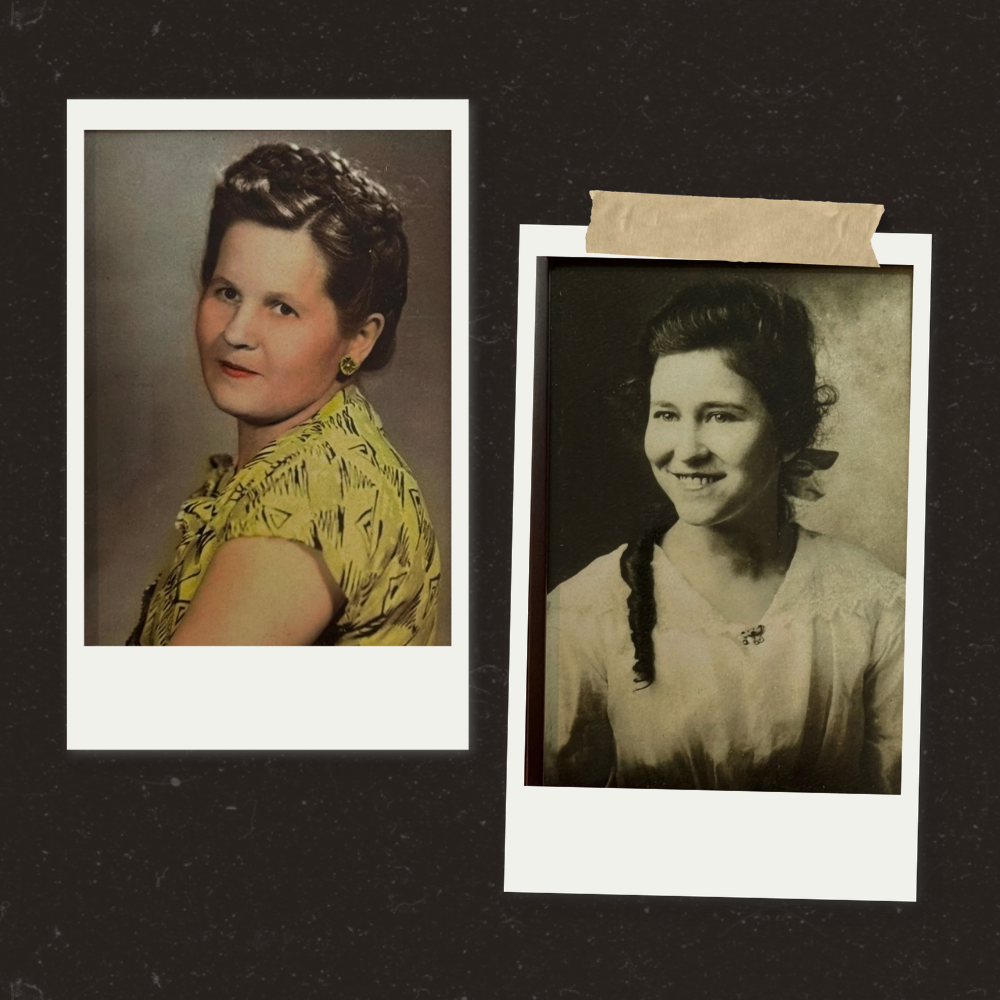
Religion can bring out the best in people and the worst in people. My two grandmothers spent most of their lives proving this point to me.
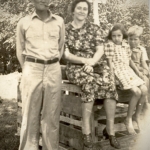
Ida Louise and Lulu. One was a Catholic and the other was a Pentecostal. My father, like his father, had little interest in Pentecostalism and because he wanted to marry my mother, he agreed to convert to Catholicism. I’m sure his mother, Grandma Lula, was horrified.
We were all baptized as Catholics, all nine of us. Most of us went through first communion. Most attended Catholic schools. I attended through the third grade. We attend the Catholic Church when we visited both sets of grandparents in Terre Haute, but I never attended Grandma Lulu’s Pentecostal church.
I had two uncles who were Pentecostal preachers, and one of them always gave the blessing prior to our meal at our family reunions. I remember always feeling left out and even ostracized because we were Catholics, not Pentecostals.
I learned, later in life, that it wasn’t just the Pentecostal versus Catholic divide, but it was the “Saved” versus everyone else: Protestants, Catholics, Jews, Mormons, Jehovah’s Witnesses, etc.
Pentecostal equaled Saved and Catholic equaled Lost
Even today, many Evangelicals (Saved) believe that Catholics are not Saved, not true Christians. I have brothers who consider themselves Saved, and they believe that my Catholic grandparents were lost and are now burning in hell.
To complicate this religious tug-of-war between my grandmothers, my parents left the Catholic Church when I was eight years old. It was explained that this had something to do with Vatican II, and a priest slapping my mother. As a result, my Catholic grandmother disowned us for five years.
We joined the Lutheran Church. I was confirmed when I was 12, and suddenly both grandmothers were on the same page.
I cannot speak for my other siblings, but I felt no acceptance, no compassion, and no empathy from either grandmother.
They were so serious, so petty and so jealous.
Where were the grandmothers who tickled their grandchildren, played table games, and use those big pieces of chalk to draw horses, pigs, and trees on the sidewalks with their grandkids?
And if you think those days are gone, and if you think that we, my siblings and me, learned the importance of tolerance, acceptance, and love, think again. Two years ago, a brother declared that, even though I claimed to be a Christian in my 20s and 30s, I was not. I was not a true Christian.
Unchristian Christianity
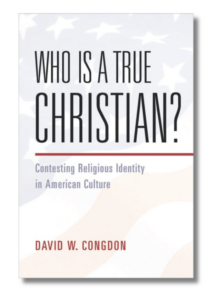
I recently picked up a book that caught my eye, “Who is a True Christian? Contesting Religious Identity in American Culture,” by David Congdon (available locally here.)
Side note: I noticed that Congdon was the same last name as a Professor at the Bible College that I attended in Portland, Oregon, 45 years ago, and David was originally from Portland. I reached out to the author, and he confirmed that he was the grandson of Dr. Roger Congdon. Small world.
Congdon’s book is partly a history of what has been called the Unchristian-Christianity Movement. Ideology without compassion.
That is what I have seen throughout my life. Christianity (the religion that I’m most familiar with) has been and continues to be a debate to the bottom. It has been and continues to be a doctrinal checklist that focuses on
belief at the expense of love, acceptance, and tolerance. Sadly, those words have become unpopular to the Unchristian Christians.
The “Nones”
The Unchristian Christians don’t think people are watching, but they are.
I asked ChatGPT to give a brief narrative and explain the trend lines for church membership and religiously affiliation over the past decade. Here’s what it came up with:
Over the past decade, the United States has seen a steady decline in both church membership and attendance. Data from Gallup shows that formal religious membership fell from roughly the mid-50% range around 2015 to the mid-40% range by 2023–2024, marking a significant cultural shift. At the same time, weekly church attendance dropped from about one in three Americans to closer to one in four. This reflects not just fewer people joining churches, but also less consistent participation among those who still identify as religious.
Another major factor is the rise of the religiously unaffiliated, often called the “Nones,” tracked by Pew Research Center. This group has grown from about 23% of the population a decade ago to nearly 30% today. Much of this change is driven by generational differences: younger adults are far less likely to affiliate with or regularly attend religious institutions, while older, more religious generations are gradually being replaced. The COVID-19 pandemic accelerated some of these trends, disrupting attendance patterns and leading many people to disengage or shift to more informal or online expressions of faith.
Taken together, these trends point to a broader cultural transition. The U.S. has moved from a society where church affiliation was the norm to one where it is no longer the majority experience. While religion remains significant for many, participation is becoming more selective, individualized, and less tied to traditional institutions.
Life Without God
In the past decade, the “Nones” have gone from 23% to 30%.
Practically speaking, these are people who are living a life without God.
That’s what the Unchristian-Christian Movement is doing.
Grandma Louise and Grandma Lulu were determined to convince us that their brand Christianity was right and that the other was going to hell. Unchristian Christianity.
True Christianity
I measure people by how they treat other, not by their orthodoxy. I couldn’t care less about their beliefs.
Congdon’s book is thorough and maybe too academic for the layperson, but here is how he concludes his book:
“It seems natural to ask, “Who is a Christian and how can I tell?” I’m suggesting that this is the wrong question and we should cease trying to answer it. The more important questions are always the more difficult: [I’ve chosen the questions that I was drawn to] What implications does their understanding have for the common good and the flourishing of society? How does their understanding promote life rather than death?”
I love watching people. One of the more heartening things that I see is people who are not Christians, not People of Faith, but people who are part of the “Nones” being the most compassionate, the most loving, and the most Christian.
Maybe it’s time to follow their example.