A Nation in Mourning | Healthy Aging Series: S12 E22
My grandfather died when I was 13 years old. He was the first person that I knew to died. He was born in 1898 and died at the age of 69. The death certificate stated that cause of death was my grandmother (JK). In fairness, Grandpa wasn’t an easy person to live with.
In a previous episode (E21), I shared that Grandma was a Pentecostal and Grandpa was raised a Baptist, and I have no doubt there was conflict between them.
My father wrote: Mother significantly influenced family matters, from finances and education to religious upbringing. Dad, raised as a Baptist, strongly disliked the Pentecostal religion. He did everything in his power to prevent her from attending the “Holy roller” church in Rosedale.
I think the real cause of death was Geriatric Depression. He simply quit eating. I remember walking past his coffin, being a little scared, mostly because I didn’t know my Grandpa Pat.
I know he had a Beagle Hound that he used to hunt rabbits.
And I have Grandpa’s 1948 Remington 12-gauge shotgun that he used when hunting with Queenie through hedgerows in Vigo County, Indiana. I remember riding on top of his John Deere tractor from the barn to the field. I didn’t know him, in part, because I don’t remember him saying much of anything.
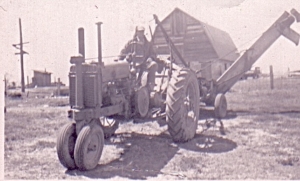
My grandpa, Pat Neese
My father has written a little bit about his father and mother. Here’s a little of what he had to say about them:
My mom and dad got along pretty well in some ways, but in others, they were totally different. When it came to farm chores and money, they worked together just fine. But their religious beliefs were pretty far apart. They both thought education was important, though I think my dad later felt that if he hadn’t given us an education, we might have just stayed on the farm. That definitely wasn’t true for me. Nothing could have kept me there—I would have taken any job, even one I didn’t like, rather than stay and work for him. Life only happens once, so you have to make the most of it. Working for Patrick Neese on the farm wasn’t a happy life for someone who wanted to enjoy things. We probably would have fought a lot if we tried to work together. I was just as stubborn as he was, and he couldn’t control me. When I joined the Marine Corps, things were already tense between us and stayed that way for a long time. Later, when I became Catholic, he cut me off. He didn’t realize that the Catholic Church had kept Christianity going through history, even though it had some pretty rough times—so bad that Jesus might not have even recognized his followers.
Dad was prone to use the rod to discipline his children too much. At least that’s the “way” he treated me. It seemed to me that I was getting the rod applied more than was necessary. Or to be more exact a willow branch. He even made me go down to the creek and cut my own willow branch. And he did this quite often. I suppose he thought it would give me more time to think about what I had done. Even my sister Joyce thought I was getting the rod too much. He got me to the place where I was carrying a lot of hate around with me. To this day I have a hard time when thinking about it. I couldn’t even rub his back when he was on his deathbed. So be careful how you use the rod, because it sticks around a long time. I never in my life told him that I loved him. I don’t think I ever told Mother that I loved her either.
As a child, I did not know him, and I guess that’s why I didn’t grieve for him after he died.
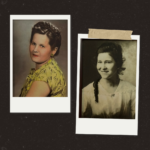
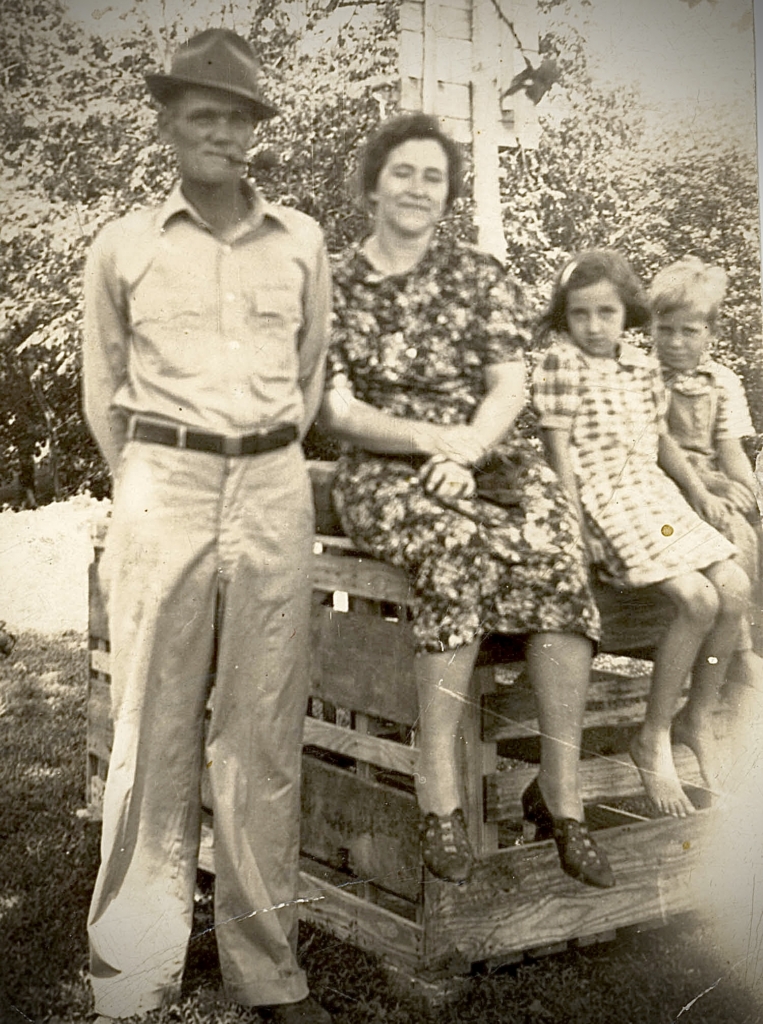
My father with his sister and my grandparents.
What is Grief?
We often grieve the people and things that we’ve lost, people we love and cherish, things that we see slipping away, things that we’ve come to depend on, and things that are slowly being dismantled, slowly defunded, and slowly dying.
Grief is a thing that everyone experiences differently.
In their chapter, “Towards a Developmental Theory of Grief,” Neimeyer and Cacciatore, in their book, Techniques of Grief Therapy, write,
“The earliest weeks of profound loss are typically characterized by a narcissistic wound: seemingly the impossible has happened, it feels as if a part of the self has been ripped away with the loved one. Early during this period, the mourner often reacts with the sense of emotional anesthesia. He or she may remain in a suspended state, or oscillate in and out of reality for a prolonged period of time period”
Some experience a more prolonged grief, a more complicated grief. This form of grief is intense, persistent, causing people to feel stuck, making it hard to reengage with life. It doesn’t soften over time.
Pedestrian Grief
There is another form of grief that many of us are experiencing in our lives today. This grief is cause by micro-losses. In a sense, it’s the price of the ticket for being human, for living in a democratic country. Lots of little losses, day after day. It’s kind of a chronic, low-grade grief.
It is watching, day-by-day, as we lose things that we love, Nothing catastrophic like the loss of a family member, but still, losses. We watch or read about the dismantling of institutions that have been with us for decades, institutions that we cherish. We have witnessed the loss of civility, of certainty, of honesty, of decorum, and the loss of world respect.
A Nation in Mourning
We are mourning as a nation, and it’s cumulative. Things are beginning to add up, and compound, to become more complicated. And on top of this, our grief is becoming corporate. We are experiencing grief, together, we are losing things that we cherish, together. I’ve been reading through, “Breakfast with Seneca,” and in his chapter on grief Fideler writes, “Seneca’s basic approach is that we should give grief its due.”
How does a nation go about giving grief it’s due?
In an earlier episode, I used Jane Goodall’s book, “The Book of Hope,” to encourage each of us to be Messengers of Hope. In her book, she spoke of Eco-Grief which is not dissimilar to what we are experiencing culturally, in our country.
“I read a report by the American Psychological Association,” she shares, “that found that the climate crisis can cause people to experience a whole range of feelings including helplessness, depression, fear, fatalism, resignation, and what they are now calling Eco-Grief or Eco-Anxiety.”
“Fear, sadness, and anger are all very natural reactions to the reality of what is happening,” Jane said. “And any discussion of hope would be incomplete without admitting the horrible harm we have inflicted on the natural world and addressing the real pain and suffering people are feeling as they witnessed the enormous losses that are occurring.”
Later, Goodall recommends that we make space for our grief and speak it.
We make space by getting together and expressing our grief and sharing our sadness.
“People are so overwhelmed by the magnitude of our folly that they feel helpless.” Goodall explains. “They sink into apathy and despair, lose hope and so they do nothing. We must find ways to help people understand that each one of us has a role to play no matter how small. Every day we make some impact on the planet. And the cumulative effect of millions of small ethical actions will truly make a difference. That’s the message I take around the world.”
What can we do to support a grieving nation? Referring back to Techniques of Grief Therapy, Meichenbaum and Myers (Chapter 19) provide a large list of things individuals do to get through their grief. I’ve pulled out a few that we can use to help each other on our journey through grief.
- Reach out to family, friends, or colleagues for comfort and companionship, but give yourself permission to back off when you need time alone.
- Reach out to folks from whom I might not normally seek help. Look for new friends in social groups, work, school, or other social networks.
- Connect with animals and nature.
- Decide not to walk through this grieving process alone.
- Establish routines of daily living and maintain good self-care.
- Reconnect with your body through exercise, yoga, Tai chi, or expressive arts, allowing yourself to get stronger.
- Allow yourself time to cry at times and give words to your emotional pain.
- Express difficult feelings through writing and talking. Start a journal, write poetry, or a personal essay.
- Engage in gratitude activities, such as telling others how much you appreciate their support.
- Once you regain your sense of hope for the future, work to establish a sense of purpose with meaningful goals, creating a life worth living, taking control of your future.
Giving Grief Its Due is Work
Ask any grief counselor and they will tell you that it takes time and it is not a one-size-fits-all process. And it can be exhausting. Sitting with people as they grieve is work. It is so satisfying and rewarding, but it’s work.
Think about that when you are having coffee or a beer with a friend who is grieving the loss of the things that they cherish. It will be exhausting, and it can be a “wear out.” But it’s what we all need. We need to give grief its due. We need to make space for our grief and speak it.
And then, as we move through and out of our grief, we will be able to effect the changes that are necessary to recreate a better place to live.
This is Season 12, Episode 22 of the Healthy Aging Series by Mark Neese. Explore more entries here.