How to Say I’m Sorry in Two Words
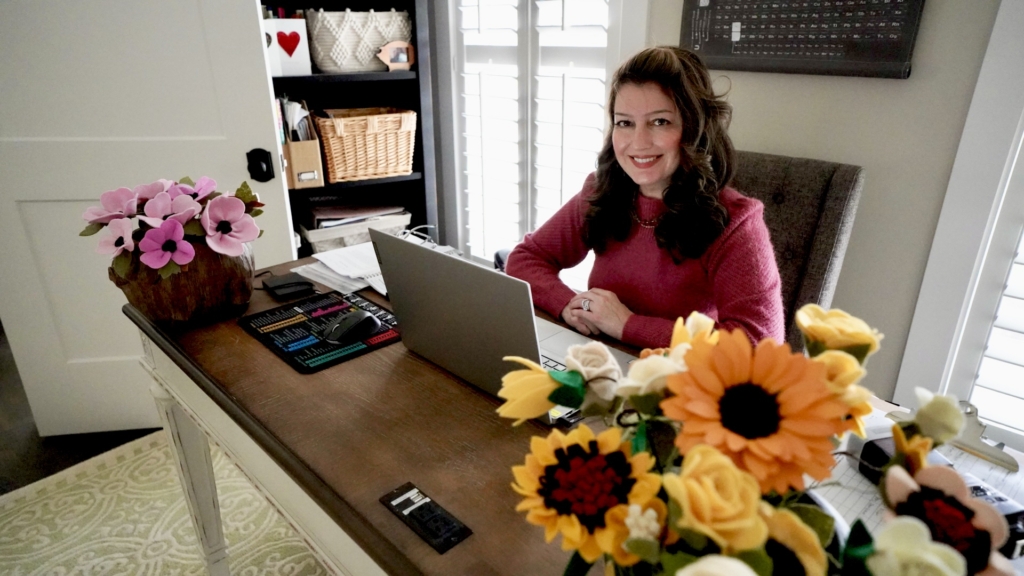
This is a guest blog written by Rommie Oshrieh Neese.
Are you a risk taker? If so, apologies may come easier for you. If not, well, when it comes to making amends and actually apologizing, you may experience some bumps and bruises in your relationships with others. Let’s face it. For many, an apology is a risk. But, what exactly is the risk?
Follow your guilt…
Here’s the thing, personally, I’m not much of a risk taker. However, at some point, people come before pride. I am good at making amends, especially when I know I’ve had a role in the conflict or misunderstanding. Ironically, that may be the very reason people don’t apologize. The risk of reaching out is scary for many people. Why is that? Is it because it’s perceived as a weakness? Is it because it admits wrongdoing? Guilt? For what it’s worth, guilt can be a positive emotion used for good! Guilt signifies that a person cares! That’s a good thing! Gee, we care. Imagine that. Why do we want to hide that we care? So, let’s not hide our own humanity. We’re not aliens. And, for what it’s worth, aliens may know how to apologize better than us.
Stop standing in your own way!
So, how do we find the courage to show we care? To show another person in our lives (who we care about) that when we know better, we can choose to do better? I’d like to thank Maya Angelou for that perspective. We are all human. Who is exempt from making mistakes, therefore, from making amends? Who? If you’re thinking what I’m thinking, we earn a point. No one. No one is exempt from the humanity of apologizing. Try it. And don’t knock it ‘til you do. I’m not lecturing you. I’m challenging all of us to evolve past ourselves and witness how life changing even one apology can be, least of all once you conquer the fear of it.
Powerhouse skills—flex that muscle!
Once you flex that muscle a few times, the muscle of courage and maturity, you will get better at it. People value courage. Why? It’s hard. Apologizing is hard. Once you make it the option it deserves to be in your life, you will start noticing your relationships changing. You will notice that you are changing. Courage and maturity are powerhouse skills that once you start pumping them, other muscles grow. Confidence grows. Self-esteem grows. Interpersonal skills grow. Your muscles are getting bigger! Then what? Well, congratulations, you have evolved! How liberating! You’ve just passed “Go” in the Monopoly of life. And you’ve probably collected more than $200.
Think about the people in your life. Your family, friends, colleagues, neighbors—a lot of people! How easy are they to talk to? Are they self-aware enough to recognize that they create the bulk of their own problems? Are we self-aware enough to recognize the same thing? Oftentimes, if you consider a problem you’re having, did you contribute to it in some way? Probably. So, what can we do about it? If you want nothing, do nothing. Good luck with that. But, for those who admit they are human, they want to be happy, they want love and acceptance—what can we do to grow past ourselves? Isn’t that part of the point of living?
Maintaining healthy relationships with others may come easy at first. It depends. Are we talking about marriage? Work relationships? A neighbor? Inevitably, problems are bound to surface, especially when you value the relationship, the person. The person contributes something of value in your life, something you want. Something that means something. So, we want to keep them in our life, right? Do you want them to value you? Yes? So how do you handle problems?
There’s no way I’m wrong!
First, for a moment, let’s forget what the other person “did.” Let’s forget their end of the deal. What did we do? Start there. Remember, no one is perfect. We all make mistakes. No one has all the answers. No matter how old you are, what your education is, what you do for a living—No. One. Has. All. The. Answers. Anyone who make-believes that they do…well, if I’m being positive, let them set the example of who you don’t want to be. Take a look at their life, their own relationships, their own inability to make amends. You’re not judging them. You’re witnessing what life looks like for people who are “never wrong.”
Otherwise, take a minute. Be honest with yourself. No one is looking. Could you have responded to a problem differently? Could you have kept your cool? Could you have chosen your words differently? Is it possible that you could have changed the outcome of the problem by choosing some part of it differently? If the answer is yes, which it more than likely is, then you’ve come to the right place—the art of apology. It’s really no art at all. A skill? Something like that. It’s acquirable.
Take the first step….
So, I could explain step-by-step how to apologize, but I would only be speaking for myself. Your apology, your growth spurt belongs to you. It’s really about taking that first step. That first word. And remembering that your apology is to make amends with someone you care about. To show you care about the impact you have on them. To know what you’re making amends for and to show that you too are hurt for hurting them. To show that you care enough to take a risk. A risk of vulnerability, of being human, of being wrong, of being sorry, of wanting change. That is courage. That is love. If you want a guarantee, look for the change that comes with making amends and meaning it. For them. For you. What does that look like for you? It may only take two tiny words. I’m sorry.
~Rommie Oshrieh Neese