
35 Million | Healthy Aging Series: S12 E24
I walked 3.5 million steps during the past 12 months.
The most steps in one day: 31,240. The most in one week: 113,443. The most in one month: 426,784. The longest streak of 10,000+ days: 16. The last three records were from September 2025.
I walk a lot. I’m writing this episode at the Muhammad Ali International Airport, and prior to sitting down to write this I walked 8000 steps.
My wife and I walk almost every evening after dinner, usually 1.5 to 2 miles.
When I have the option of taking an elevator, I almost always take the stairs.
I almost always park as far as I can from a store entrance.
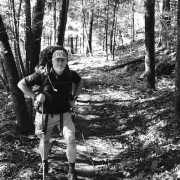
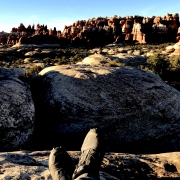
I’m guessing at least one million of those 3.5 million steps have been on a trail, in forests, deserts, mountains, and canyons. The rest have been mostly in parks. I love walking in the parks.
If I have a break in the day between appointments, I walk.
I walk and talk with many of my clients.
I go through at least four pairs of Trail shoes in a year
I’ve gone through 8 to 10 day packs over the past two decades.
It might surprise you, but I do not set any particular goals for walking. Over the past year, I’ve have had many days where I walked more than ten thousand steps but reaching that number was never my aim. Instead, I’ve concentrated on something else.
I’ve focused more on the amount of time I walk. I’ve averaged 600+ minutes of moderate walking (zone two and three cardio) every week. That’s 30,000 minutes of zone two and three over the past year.
So, what’s the verdict? What has all that walking done for me?
I’d like to tell you that I have perfect blood work, but at 70 that would be nearly impossible. I do have very good bloodwork, but not perfect.
I’m rarely sick, and generally speaking, I can do almost anything I want, which includes hiking to the top of 14,000 foot peaks, hiking to the bottom of the Grand Canyon, and now I’m headed to New Mexico, as I write this, to backpack to Stuart Lake with my Son.
And in September, I’m headed to the Wind River Range, in Wyoming, for four nights and five days to backpack the Cirque of the Towers.
My Garmin watch tells me I’m 10 years younger than my chronological age. My fitness age is 60.
What are the benefits of walking? Let me share some interesting facts:
Walking may be the closest thing we have to a wonder drug, and it’s cheap.
No expensive equipment. No gym membership. No complicated routines. No need to become an athlete. Just put one foot in front of the other. Walking is less like exercise and more like medicine for the whole person.
Walking helps the heart and cardiovascular system.
Study after study show that regular walking significantly lowers the risk of heart disease, stroke, high blood pressure, diabetes, and premature death. One major study found that people who walked around 7000 steps per day had substantially lower risk of early death, cardiovascular disease, depression, and dementia. A short walk after dinner matters. A walk around the block matters. A walk with the dog matters.
Walking helps the aging brain.
Most of us are worried about memory loss and cognitive decline, and the good news is that walking appears to help protect the brain. Research suggests that regular walking can improve memory, sharpened attention, increase mental clarity, reduce the risk of dementia, and preserve cognitive functioning as we age. Walking improves blood flow to the brain while also stimulating neural activity related to learning and memory.
Walking helps address your depression and anxiety issues.
Many recent studies have indicated that walking can profoundly affect your mental health in positive ways. Research consistently shows that walking reduces stress, depressive symptoms, anxiety, and emotional tension. Working outdoors appears especially beneficial. Nature itself seems to calm the nervous system. I love walking through the trees, in the sunlight, breathing in fresh air, and bathed in the open skies.
Walking helps us stay independent.
Most of us fear that we will lose our independence as we age. Walking directly supports the abilities that make independent living possible. Walking helps maintain balance, muscle strength, bone health, endurance, and mobility. Walking helps us when we climb stairs, carry groceries, travel, play with our grandchildren, enjoy nature, and remain connected in the community.
Walking with others is also beneficial.
Walking with a spouse, friend, neighbor, or group combines physical movement with social interaction, the two strongest predictors of emotional well-being in later life. Conversations flow differently when we walk with others. I’ve seen this especially as I’ve walked with my clients in the parks. People open up more. A simple daily walk with another person can increase companionship, accountability, emotional support, and a shared ritual.
You don’t need to become a fitness expert to become a walker.
You don’t need perfect knees, elite conditioning, expensive clothes, or complicated technology. You simply begin where you are. 5 minutes become 10. 10 minutes become twenty. Consistency matters far more than intensity. A slow walk is still infinitely better than remaining sedentary. And unlike many aggressive exercise programs, walking is sustainable. People can continue doing it well into their 70s, 80s, and beyond.
That’s a lot of benefits from walking.
Forget triathlons, half marathons, 5Ks and 10Ks. Just walk.
I titled this episode 35 million which refers to the number of steps I’m going to walk in the next decade, the decade during my 70s.
That’s not my goal, but rather the result of my lifestyle.
From July 2026 to July 2036, that’s 10 years, I’m going to live a life lifestyle (if fortune favors me) that will support 35 million steps.
All I have to do is just keep doing for the next 10 years what I’ve done this year.
It’s going to be a wonderful decade.