
When You’ve Lost Faith in Everything but the DMV | Healthy Aging Series: S12 E19
The line wasn’t long. The secret is: Get to the DMV as early as possible. Another secret is: Move to a smaller county with a smaller DMV.
After less than a 10-minute wait, Amy, the DMV worker, called me up and asked how she could help. “I need to renew my plates,” and handed her my driver’s license, registration, and insurance card.
My tags had expired, and I was still in that 30-day grace period, but she eyed them slowly and explained (I could feel my blood pressure rising) that my insurance card had also expired. I would need to contact my insurance agent and have them fax an updated insurance card.
She could’ve shooed me away and told me to come back later, you know when the line was longer, but she didn’t. She said, “You can step away, download your insurance company’s app, enter your policy number, and then send that to my email address. If you want to do that,” she continued, “step aside, and when you’re done, stand right there,” pointing to the front of the line, “and I’ll take care of you next.”
Less than 15 minutes later, I was putting my new sticker on my Veteran plates.
Speaking of which, I wouldn’t have Veteran plates, except a very pushy DMV worker insisted that I go home, bring back my DD form 214, and stand right there, pointing to the beginning of the line, telling me she would see me next. She wanted me to be recognized for my service. I tear up a little bit when I think of what she did, how this DMV worker, and how these two government employees, cared about me, both of them.
Government employees have taken a lot of hits over the past few years. Some unfair and some warranted. Many have lost their jobs, but some of committed atrocious crimes, abused defenseless people of color, and have taken away our sense of safety. You may not agree, but there’s no question in my mind, that the government is a mess, and I for one have lost a little faith in it. And I worry about it, the government.
What is the government?
That question it’s not as simple as it seems. Would we want to include elected officials under that umbrella? Maybe, but if you do, you have to allow for it to be contaminated with politics.
The thing is, most government employees provide what I would consider apolitical services. The DMV is a good example. DOT workers. Parks and Rec workers. Even workers that help manage entitlement benefits, like Social Security and Section 8 housing. All apolitical.
You can disagree. I won’t bite your head off, but most of us would draw a P-line with government employees, the line between politicians and those employees providing services.
If you draw a P-line, maybe it would help to restore a little bit of your faith in your government. Maybe this is one of those, “Don’t throw the baby out with a bathwater,” moments. And if you embrace that idea, and it shouldn’t be too hard. The real question isn’t, “What is the government?” but rather “Who is the government?”
And if you embrace the idea that most government employees are hard-working, dedicated people who serve us every day, sometimes for 30 years, to make our towns, our counties, our states, our country better places. And if you embrace these ideas, then maybe you can stop that slow erosion of your faith and begin to have hope that this country stands on the shoulders of some wonderful and caring human beings that are guided by one north star, the Star of Service.
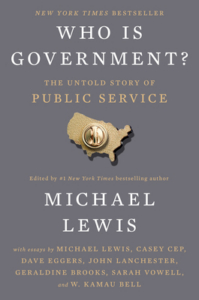
“Who is the Government? The Untold Story of Public Service.”
That’s the title of a new book edited by Michael Lewis. It’s a series of essays about people who “do interesting jobs for the government.“
Here’s what the dust cover says about this book: “Each essay shines a spotlight on the essential, behind the scenes, work of exemplary employees. They show how the essential business of government makes our lives possible and how much it matters.“
Lewis opens his book with a quote from President John F. Kennedy regarding the work that government employees provide.
“Let the public service be a proud and lively career. And let every man and woman who works in an area of our national government, and any branch, at any level, be able to say with pride and with honor in future years: “I served the United States in that hour of our nations need.”
I’m slowly working my way through these essays, marinating on them. It isn’t often that I remember a particular chapter from a book a week later, but the first two were memorable. Chapter 1 is the story of a man, Christopher Mark, who invested his life making mines safer for coal miners in Kentucky, West Virginia, Virginia, Pennsylvania, and many other places that have underground mines. Mark applied his engineering background to mine safety and reduce deaths due to ceiling collapses. The number of deaths in mines during 2016 was zero. In previous years it ranged from 362 in 1911, to 111 in 1952. Thank you, Christopher Mark!
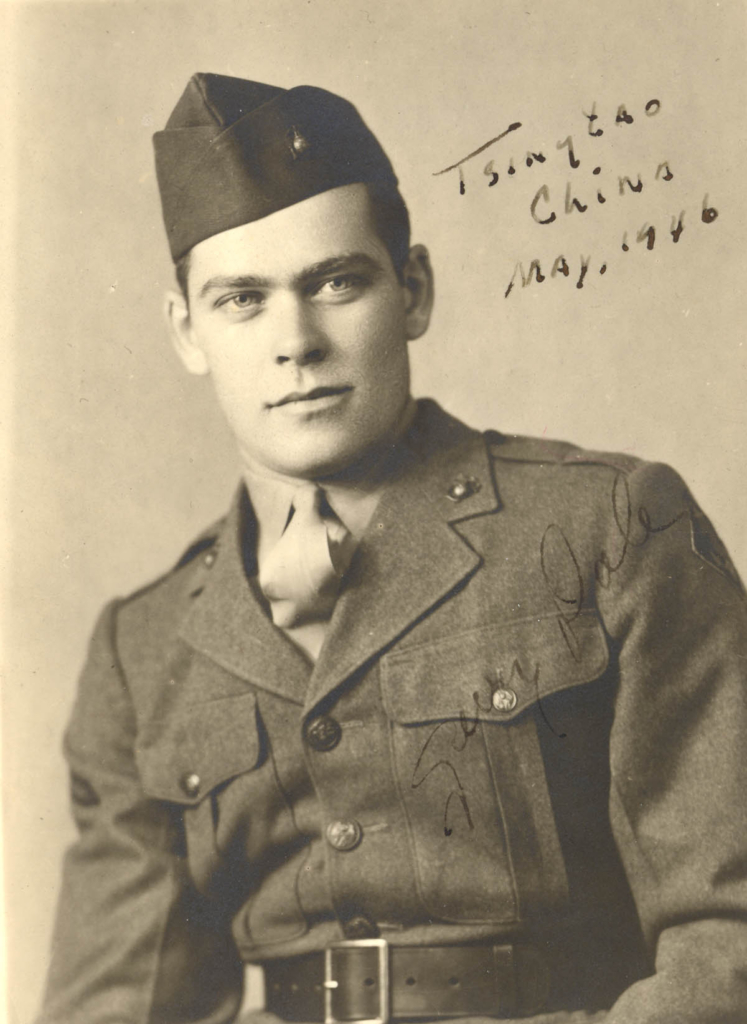
Chapter 2 introduces us to Ronald Walters who works for the National Cemetery Administration. He ensures that all veterans and those killed in action receive the honor that they are due for their service. I think the way we honor those who served in uniform says a lot about a country. Yes, I’m a little biased, but shouldn’t we all be a little biased. I learned what it meant to serve from my father who was a Marine in World War II, and so I served.
I’m working my way through the book, through these people’s lives, and it’s healing me, and yes, inspiring me, restoring my faith in government.
I invite you to pick up the book and read it when you’ve lost faith in everything but the DMV. It’s time to humanize our government.
Government employees are the backbone of our country. They are the reason that you and I have a safe place to work, and roads, and libraries, and clean running water, and a safe food supply, and I could go on and on.
“I don’t trust politicians any farther than I can throw them,” my father would say, but he would that follow up with, “but those who serve government are golden.”
Thank you, Dad I couldn’t have said it’s better.